
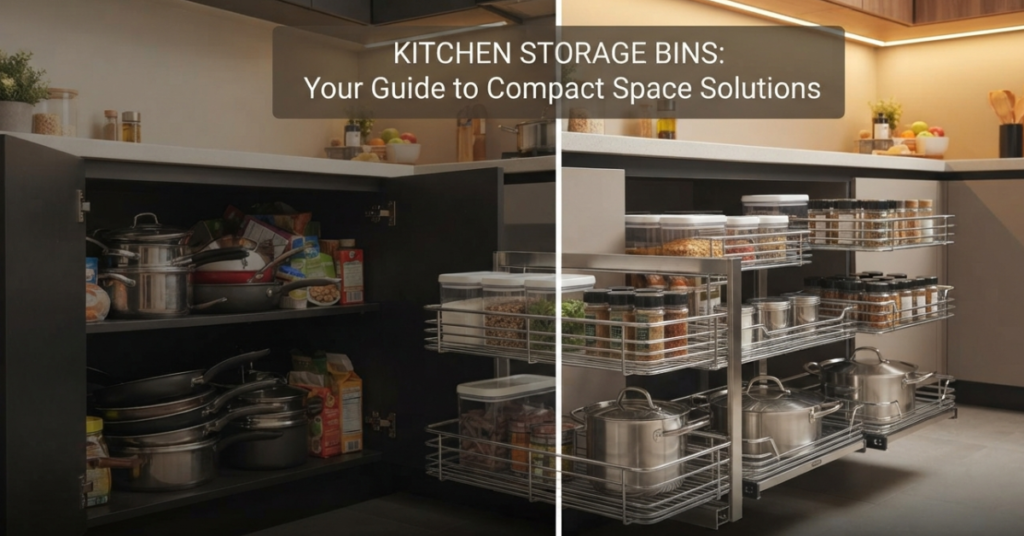
Upgrading compact kitchens requires replacing static shelving with full-extension pull-out bins, vertical spice racks, and corner carousels. Utilizing food-grade SS 304 stainless steel and high-load runners reclaims up to 40% of wasted cabinet space while protecting stored goods from humidity and pests.
Core Storage Framework: Resolving Kitchen Clutter in Compact Spaces
Optimizing a compact urban kitchen in Dhaka or Chittagong requires moving away from static shelving and fully utilizing vertical space. Incorporating high-density kitchen storage bins transforms deep, hard-to-reach cabinetry into accessible, organized pull-out zones that streamline daily cooking workflows.
Executing a structural storage upgrade depends on understanding how specific organizers maximize cabinet depth and vertical height:
- Base Cabinet Pull-Out Bins: Convert deep ground-level cupboards into sliding drawers, ensuring full visibility of heavy pots, cast-iron pans, and bulk grocery sacks without requiring physical strain.
- Vertical Spice & Sauce Racks: Utilize narrow 150mm to 300mm gap spaces between major appliances to house oil bottles, soy sauces, and daily masala jars in upright, secure compartments. A specialized drawer spice rack streamlines seasoning access during high-heat cooking.
- Under-Sink Drainage Baskets: Utilize awkward plumbing zones by wrapping U-shaped wire baskets around drainage pipes to store cleaning agents, sponges, and scrubbers off cabinet floors.
- Wall-Mounted Hanging Rails: Shift frequently used ladles, strainers, and chopping boards off prep surfaces onto heavy-duty stainless steel wall hooks and hanging racks.
Practical Daily Benefits of Architectural Kitchen Planning
Integrating high-capacity kitchen storage bins provides clear operational advantages that directly improve household workflow, food safety, and long-term property value.
Rapid Meal Preparation Workflows
Searching through cluttered, unlit cabinets during peak cooking hours wastes time and increases domestic fatigue. Organizing ingredients into categorized, clear-front kitchen storage bins or smooth-sliding wire baskets cuts ingredient retrieval times significantly.
Enhanced Food Hygiene and Pest Defense
Subtropical climates feature elevated humidity levels that promote rapid spice clumping, rice weave infestation, and cabinet mold growth. Food-safe, non-toxic kitchen storage bins create sealed environmental barriers against moisture and insect entry.
Countertop Preservation and Ergonomic Safety
Overcrowded counter surfaces increase the risk of hot liquid spills, oil splatters, and accidental dish breakage. Moving non-essential appliances and daily staples into designated kitchen cabinet organizers frees up continuous work surfaces for chopping and plating. Clear surfaces allow quick hygienic wiping post-meal, keeping the cooking environment pristine.
Material Standards and Hardware Specifications
Selecting reliable kitchen accessories, such as kitchen storage bins, requires evaluating material composition, anti-corrosion treatments, and load-bearing hardware parameters before installation.
Stainless Steel Grades (SS 304 vs. SS 201)
Always verify the metal grade specified for wire baskets, structural frames, and kitchen storage bins. Grade 304 stainless steel contains higher nickel content, offering total resistance to rust caused by kitchen steam, water splashes, and salty air.
Soft-Close Runner Mechanics
Smooth hardware movement depends on heavy-duty ball-bearing slide rails equipped with hydraulic dampening cylinders. Soft-close systems absorb door impact, keeping kitchen storage bins and spice jars from rattling or tipping over when cabinets are closed quickly.
Food-Grade Tempering and Environmental Safety
Plastic storage inserts and clear pull-out kitchen storage bins must feature certified BPA-free, food-grade polymers. Tempering ensures the plastic resists cracking when subjected to temperature shifts near cooktops or inside refrigeration zones.
Architectural Comparison of Kitchen Storage Solutions
Evaluating kitchen storage bins by functional location and capacity parameters helps balance structural investments against specific cabinet dimensions.
| Product Category | Best Architectural Location | Key Functional Advantage | Target Kitchen Layout |
| Pull-Out Drawer Baskets | Deep Base Cabinets | Full-extension visibility eliminates physical strain | Small to Large Apartments |
| 360-Degree Revolving Baskets | L-Shaped Dead Corners | Full perimeter rotational access to hidden rear space | Compact L-Shaped Layouts |
| Vertical Side Pull-Outs | 150mm–300mm Cabinet Gaps | Upright storage for liquid bottles and tall jars | Narrow Parallel Kitchens |
| Tall Pantry Larder Units | Floor-to-Ceiling Wall Units | Maximum volumetric density across multi-tier trays | Medium to High-End Residences |
| Wall-Mounted Utility Rails | Backsplash & Above Sinks | Keeps countertops completely clear of damp tools | Ultra-Compact Studio Kitchens |
Tailored Small Kitchen Storage Strategies for Apartments
Maximizing tight kitchen footprints requires leveraging vertical height, dead corner intersections, and internal cabinet door frames.
Eliminating Dead Space with Corner Systems
L-shaped cabinet corners frequently turn into dark, inaccessible voids where unused cookware accumulates. Installing a smooth 360 revolving basket brings items from the furthest corners directly to the cabinet opening with a gentle spin.
Modern blind-corner pull-out trays extend outward and pivot smoothly, ensuring every cubic inch performs a functional role.
Leveraging Vertical Wall and Door Real Estate
Unused backsplash walls offer primary real estate for functional organization:
- Mount dual-tier wire racks for dish-drying setups directly above the main washing zone.
- Install magnetic knife bars and heavy-duty steel hooks for ladles, scissors, and oven mitts.
- Attach slim metal spice baskets to the interior faces of pantry doors to utilize empty air gaps inside cabinet frames.
Optimizing the Primary Washing Zone
Keep damp cleaning supplies organized by installing dedicated under-sink slide baskets and rack systems. Placing a durable stainless steel or high-capacity double bowl sink alongside integrated drainage baskets prevents dirty water accumulation on surrounding stone counters.
Market Trends and Pricing Factors in Bangladesh
Understanding local pricing variables and market shifts enables home renovators to make informed purchasing decisions tailored to specific budgets.
Modular Customization vs. Freestanding Units
Homeowners across major urban centers are moving away from temporary plastic racks toward fully integrated modular fittings. Custom stainless steel pull-outs engineered to match specific internal cabinet dimensions offer higher durability, superior aesthetic integration, and better space utilization than generic standalone units.
Key Factors Influencing Pricing
The cost of modular fittings across domestic suppliers varies based on three main criteria:
- Material Composition: Certified SS 304 stainless steel commands higher market rates than SS 201 or chrome-finished mild steel due to its lifetime anti-rust characteristics.
- Hardware Engineering: Imported soft-close, full-extension runner systems add a premium over standard manual slide tracks but deliver significantly smoother operation and longer operational lifespans.
- Weight Load Ratings: Multi-tier larder units engineered to hold up to 80kg feature reinforced structural frames, impacting final pricing compared to light-duty wire frames.
Common Installation and Purchasing Mistakes to Avoid
Prevent costly design mismatches and hardware failures when planning your kitchen storage bins by watching for these frequent oversights:
- Inaccurate Internal Measurements: Measuring cabinet outer frames instead of precise internal clearance width, depth, and hinge projection leads to hardware installation failures.
- Ignoring Hinge Clearance Requirements: Failing to account for door hinge projection prevents pull-out baskets and sliding drawers from extending fully out of cabinet frames.
- Exceeding Recommended Load Capacities: Overloading light wire baskets with heavy iron cookware or multi-kilogram flour sacks bends runner tracks and damages soft-close dampers.
- Selecting Low-Grade Metal for Wet Zones: Installing uncoated iron or low-grade steel racks near washing sinks causes rapid rusting, staining wooden cabinetry and compromising food hygiene.
Pro Tip: Always apply a light coating of machine oil or silicon lubricant to ball-bearing drawer slides once every six months to maintain whisper-quiet, friction-free movement in humid environments.
Maintenance and Long-Term Care Standards
Sustaining the mirror-finish shine and smooth operation of kitchen storage hardware requires routine care:
- Routine Surface Cleaning: Wipe down stainless steel wire baskets using a damp microfiber cloth and mild dish soap. Avoid harsh chloride-based cleaners or abrasive steel wool that scratch protective coatings.
- Moisture Control in Enclosed Base Cabinets: Place moisture-absorbing silica pouches or liner mats inside sink base cabinets to catch accidental water drips and keep humidity low.
- Hardware Inspection and Tightening: Periodically check mounting screws on soft-close slides and door brackets to prevent loosening caused by daily door slamming.
Proper hardware selection, accurate structural measurement, and disciplined maintenance turn chaotic apartment kitchens into organized, high-efficiency culinary spaces. Upgrading to high-grade storage bins and modular organizers safeguards ingredients, speeds up daily meal prep, and provides lasting domestic comfort.
Next Steps & Resource Directories
Browse Full Directories
Kitchen Park BD Main Hub > Modular Accessories Directory
Related Articles
- Kitchen drawer spice rack cabinet tips | Drawer Spice Rack
- Cabinet Pull Out Rack: Maximize Kitchen Storage
- Cabinet Spice Rack: Smart Storage Tips for Every Kitchen
- kitchen accessories 900mm wire pull out drawer basket for cabinet storage rack
