
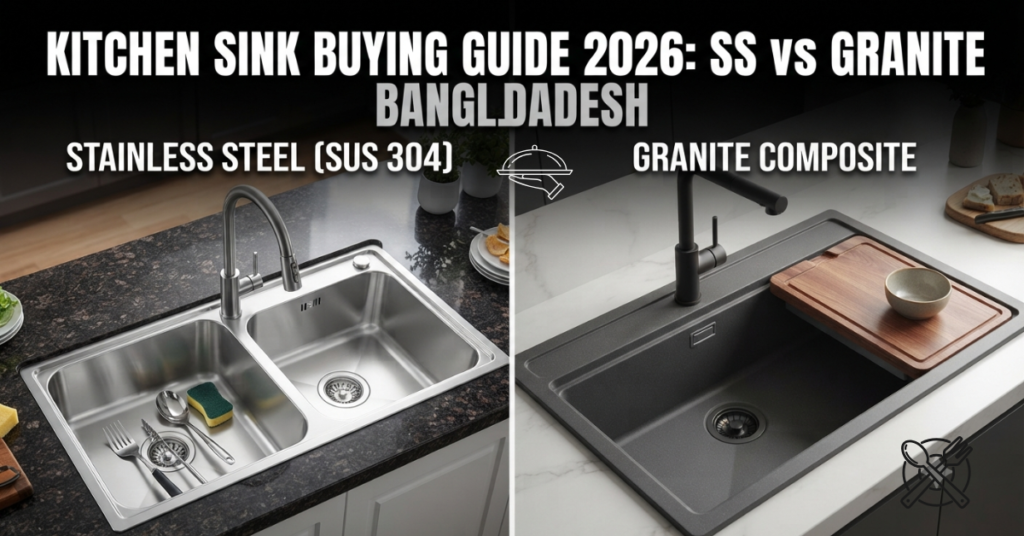
Kitchen sink Upgrading your washing zone requires balancing basin capacity, material durability, and counter dimensions. Selecting the right sink prevents water overflow, cabinet damage, and chronic rust caused by hard water exposure.
Technical Breakdown: Selecting the Ideal Kitchen Sink for Bangladeshi Homes
Kitchen sink To resolve daily kitchen friction, you must match your washing station specifications directly to your household prep volume and utensil sizes.
Single Bowl vs. Double Bowl Basins
Selecting a high-quality single bowl kitchen sink provides maximum open basin room for scrubbing large cookware without spatial restrictions.
Alternatively, installing a double bowl kitchen sink divides prep tasks into dedicated zones. You can soak rice or thaw fish in one bowl while maintaining a clear dishwashing basin in the second.
| Sink Type | Recommended Width | Primary Advantage | Best Suited For |
| Compact Single Bowl | 18″ – 24″ | Saves maximum counter space | Studio apartments & small kitchens |
| Large Single Bowl | 28″ – 32″ | Fits oversized cookware flat | Heavy traditional cooking |
| Equal Double Bowl (50/50) | 32″ – 36″ | Equal task separation | Large households with multi-person prep |
| Offset Double Bowl (60/40) | 30″ – 34″ | Combines large vessel washing with rinsing | Balanced daily cooking needs |
Material Standards: SUS 304 Stainless Steel vs. Granite Composite
Kitchen sink Water supplies in regional cities like Dhaka, Chittagong, and Khulna often carry elevated iron content and mineral hardness.
- SUS 304 Stainless Steel: The benchmark material for durability. High-grade 304 steel contains 18% chromium and 8% nickel, rendering it immune to oxidation and harsh washing detergents. Ensure you select 16-gauge (1.5mm thick) or 18-gauge (1.2mm thick) sheets to resist structural denting when handling heavy brass pots.
- Granite Composite & Quartz: Investing in a premium granite composite sink bd homeowner favorite offers superior scratch resistance and modern aesthetics compared to lightweight metal basins. Engineered from 80% quartz granite sand and 20% acrylic resin, these non-porous surfaces resist heat up to 280°C and dampen operational noise naturally.
Pro Tip: Avoid low-cost 201-grade stainless steel sinks. While cheaper initially, 201-grade metal lacks sufficient nickel content and rusts rapidly when exposed to untreated groundwater and acidic spices.
Standard Dimensions & Counter Cutout Specs
Choosing a standard kitchen washing basin size that fits your counter cutout precisely prevents expensive cabinet adjustments and plumbing misalignment.
Depth & Splatter Prevention
Basin depth is critical for splash control. Standard imported sinks range from 6 to 10 inches deep.
- Shallow Basins (6 to 7 inches): Cause continuous water splashing onto clothing and surrounding wooden countertops, leading to moisture rot along cabinet edges.
- Optimal Depth (8 to 10 inches): Keeps water spray contained inside the basin and conceals unwashed dishes below counter sightlines.
- Deep Basins (11+ inches): Offer massive capacity but require lower plumbing hookups and can cause back strain during extended manual scrubbing.
Cabinet Clearance Requirements
Before purchasing, measure the inside width of your base sink cabinet rather than just the outer countertop:
- Outer Cabinet Width: A standard 36-inch base cabinet comfortably accommodates up to a 33-inch undermount sink.
- Front-to-Back Clearance: Ensure at least 3.5 to 4 inches of total deck space between the back wall and the sink rim to accommodate faucet installation, water supply lines, and backsplash tiles.
- Overhead Cabinet Clearance: Verify vertical distance from top of basin rim to bottom of overhead cabinets if installing wall-mounted drying racks or tall gooseneck faucets.
Price Analysis in Bangladesh (2026 Market Standard)
Kitchen sink Evaluating market options based on structural durability prevents premature replacements caused by rust, sagging, or cabinet damage.
Price Breakdown by Category & Material
Evaluating current market options reveals distinct price brackets based on gauge thickness, bowl count, and sound-dampening technology:
- Basic Single Bowl Stainless Steel (201-Grade, 20-Gauge): BDT 2,500 – BDT 4,500. Suitable for temporary rentals; susceptible to scratching and surface rust.
- Premium SUS 304 Single Bowl (16/18-Gauge with Rubber Undercoating): BDT 6,500 – BDT 14,000. Features deep noise insulation pads, satin anti-scratch finish, and basket strainers.
- SUS 304 Double Bowl Heavy Duty: BDT 12,000 – BDT 24,000. Ideal for family homes requiring parallel washing and food preparation space.
- Modern Quartz / Granite Composite Sinks: BDT 18,000 – BDT 38,000+. Premium architectural finish with extreme scratch resistance and sound dampening.
- Multi-Functional Waterfall & Digital Sinks: BDT 22,000 – BDT 45,000. Features integrated glass washers, waterfall spouts, pull-out sprayers, and sliding cutting boards.
Warning: Extremely low market listings often reflect thin 22-gauge steel or lightweight tin alloys. Thin metal flexes under heavy water weight, breaking silicone seals along the counter edge and leaking into lower cabinets.
Installation Styles: Undermount vs. Top-Mount vs. Flush-Mount
Kitchen sink How your sink integrates into your countertop dictates long-term cleaning convenience and waterproofing stability.
Top-Mount (Drop-In) Sinks
Top-mount sinks feature an overlapping perimeter rim that sits directly on top of the countertop surface.
- Pros: Easiest installation; compatible with all countertop materials including laminate, wooden slabs, and marble.
- Cons: The raised outer rim traps breadcrumbs and moisture, requiring frequent rim cleaning to prevent black mold growth.
Undermount Sinks
Undermount models mount directly beneath the countertop cutout, creating a seamless rimless transition.
- Pros: Allows you to wipe water and food debris directly off the counter into the sink with no raised edge obstruction. Elevates kitchen visual appeal.
- Cons: Requires rigid countertop materials like granite, quartz, or concrete. Installation demands heavy-duty mounting clips and structural silicone support.
Flush-Mount (Tile-In) Sinks
Flush-mount setups align the rim perfectly level with the surrounding stone counter.
- Pros: Provides a completely flat surface aesthetic without lip protrusion.
- Cons: Demands precision CNC stone cutting and expert masonry skills, increasing overall renovation costs.
Smart Washing Zone Accessories & Space Optimization
Kitchen sink Modern urban apartment layouts in Dhaka and Chittagong rely on vertical space management to maintain clutter-free counter zones.
Integrated Basin Accessories
Maximizing your basin area with modular drop-in accessories converts a standard sink into an all-in-one prep workstation:
- Over-the-Sink Colanders: Drop into basin rims for immediate vegetable washing and pasta draining without taking up counter space.
- Roll-Up Silicone Drying Mats: Extend across open basin sections to air-dry washed cups and utensils directly over the drain.
- Sliding Hardwood Cutting Boards: Glide horizontally along integrated sink ledges, allowing you to slice meat and vegetables while brushing scraps directly into the waste disposer or strainer.
Storage Integration Above and Below
Kitchen sink Expanding your storage around the washing zone maintains clear working surfaces. Installing a vertical wall-hung dish rack directly above your sink allows dripping water to drain naturally straight into the basin without soaking dry counters.
Kitchen sink For lower cabinetry, integrating pull-out wire baskets and waterproof PVC under-sink organizer trays keeps detergents, sponges, and trash bins neatly hidden from sight while shielding cabinet wood from plumbing condensation.
Common Mistakes to Avoid During Purchase & Installation
Kitchen sinkKitchen sink Avoiding standard structural oversights guarantees a trouble-free installation and protects your home against costly leak repairs.
- Neglecting Faucet Clearance: Purchasing an extra-deep sink along with a high-arch gooseneck faucet without verifying wall cabinet depth or window shutter clearance can block faucet handles or overhead storage doors.
- Ignoring Sound Insulation: Installing uninsulated metal basins results in loud drum-like water noise throughout your home. Always check for thick acoustic rubber pads and full underbody anti-condensation spray coatings.
- Skipping P-Trap Air Vents: Incorrect drain pipe angles without proper air venting cause water to drain sluggishly and allow sewer gases to travel back up through your basin strainer.
- Incorrect Silicone Application: Using standard construction silicone instead of 100% anti-fungal sanitary silicone leads to black mold growth and water leaks along the sink edge within months.
Maintenance & Care Guide for Bangladeshi Water Conditions
Kitchen sink Hard water deposits and daily spice exposure require targeted cleaning routines to preserve structural shine.
- Daily Rinsing: Always rinse food residue, turmeric paste, and acidic juices immediately after meal prep to prevent localized surface discoloration.
- Removing Hard Water Stains: White mineral rings caused by iron-heavy water can be removed by spraying equal parts white vinegar and warm water, letting it sit for 5 minutes, and wiping with a microfiber cloth.
- Avoiding Harsh Scourers: Never use raw steel wool on satin or PVD-coated sink surfaces. Steel wool leaves microscopic iron particles behind that oxidize and create fake “rust” spots on stainless steel. Use non-scratch scouring pads instead.
Browse Full Directories
[Main Hub] > [Kitchen Sinks & Washing Zones]
Related Articles
- 2-Burner Gas Stove Options & Specifications in Bangladesh
- Premium Double Bowl Kitchen Sinks for Modern Prep Zones
- Drawer Spice Racks for 300mm Cabinet Storage Systems
- Magic Corner Systems for Transforming Cabinet Dead Space
