
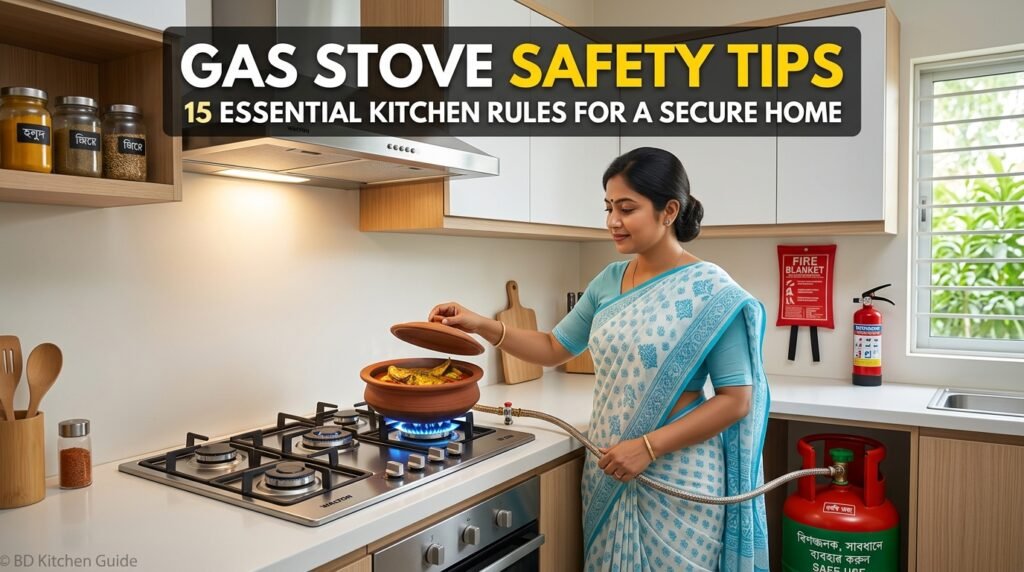
Mastering daily meal preparation requires a blend of culinary passion and strict adherence to kitchen protocols. In compact apartment spaces, implementing reliable gas stove safety tips protects your household from unexpected fire hazards and gas leaks. This comprehensive guide outlines ten essential rules, practical equipment upgrades, and smart organizational habits for modern homes.
Understanding Gas Stove Safety in Modern Bangladeshi Homes
To keep your kitchen running smoothly, keeping a few essential gas stove safety tips in mind is crucial. Unventilated cooking zones and cluttered workstations can quickly transform a relaxing routine into a severe hazard, making proper maintenance and spatial organization a top priority for every household.
Smart kitchen planning, durable appliances, and strict safety consciousness matter more than ever before. Whether you are moving into a newly renovated apartment or upgrading your current setup, understanding fundamentals such as essential gas stove safety tips protects your family.
This guide explores core safety rules, equipment choices, and storage habits to maintain a secure environment.
The 10 Essential Rules for Safe Gas Stove Cooking
Rule 1: Always Check for Gas Leaks Regularly
Gas leaks pose an invisible yet catastrophic danger in enclosed residential spaces. Routinely inspect your rubber hoses, regulator valves, and connections using soapy water to detect bubbles. If you smell gas, never ignite a flame or turn on electrical switches; instead, ventilate immediately.
Rule 2: Keep Flammable Materials Away from Burners
Paper towels, plastic containers, and cloth dish rags should never rest near active burners. Maintain a strict clearance zone of at least three feet around your stove surface. Accidental flare-ups happen instantly when combustible items encroach on open flames.
Rule 3: Invest in Proper Kitchen Ventilation
Smoke, grease particles, and carbon monoxide accumulate rapidly during heavy-frying sessions common in local cuisine. Installing a high-efficiency range hood price model ensures toxic fumes and heat escape your apartment safely. Proper airflow keeps indoor air quality breathable and prevents grease film buildup.
Rule 4: Stay Attentive While Cooking
Leaving active burners unattended is a leading cause of residential kitchen fires in urban environments. If you must step away, turn off the burner or ask another family member to monitor the pot. Never leave boiling liquids or frying oil completely unsupervised.
Rule 5: Position Pan Handles Inward
Whipping up large family meals means working with heavy pots filled with hot oil or boiling water. Always turn pan handles inward toward the back or center of the cooktop. This prevents children or passing adults from accidentally bumping into handles and causing severe scalds.
Rule 6: Maintain Clean Burners and Ports
Clogged burner ports cause uneven flames, incomplete combustion, and dangerous gas flare-ups. Clean your burners weekly using warm soapy water and a fine pin to clear blocked gas pathways. Regular maintenance ensures optimal fuel efficiency and steady heating performance.
Rule 7: Use the Correct Cookware Size
Matching your pot size to the appropriate burner diameter ensures stability and efficient heat distribution. Oversized pans smother flames, while undersized pans expose open fire to nearby handles and surfaces. Sturdy pan supports prevent tipping during heavy stirring routines.
Rule 8: Secure Your Gas Cylinder Properly
If your home uses LPG cylinders, store them in a well-ventilated, upright cabinet away from direct sunlight and heat sources. Never place gas cylinders inside sealed compartments that lack lower-level ventilation grills. Check your regulator hose expiration dates annually without fail.
Rule 9: Keep a Fire Blanket and Extinguisher Ready
Every modern kitchen should house a rated fire blanket and a small powder-based fire extinguisher within arm’s reach. Never use water to put out a grease fire, as it causes oil to splatter and spread flames instantly. Knowing how to deploy safety equipment safeguards your entire apartment building.
Rule 10: Educate Family Members on Emergency Protocols
Safety rules only work when every household member understands what to do during an emergency. Teach older children how to shut off the main gas valve and evacuate safely. Regular household discussions regarding kitchen hazards ensure everyone remains calm under pressure.
Essential Kitchen Infrastructure for Hazard Prevention
To maximize your setup, integrating comprehensive gas stove safety tips into your daily routine ensures long-term security and efficient cooking.
Prioritizing kitchen safety is essential for any home. When integrating high-performance ventilation systems with your cooking setup, it is important to keep Gas stove safety tips in mind to maintain a secure environment.
Smart Storage and Layout Planning to Minimize Risk
Beyond organization, practicing consistent gas stove safety tips is vital for a secure cooking environment. Always ensure that flammable items such as dish towels, oven mitts, and loose clothing are kept well away from open burners. Regularly inspect your stove for gas leaks, ensure burner heads are free of grease buildup, and never leave an active flame unattended.
Utilizing specialized internal cabinet hardware transforms chaotic spaces into organized zones. Homeowners frequently research a corner basket price breakdown to maximize dead cabinet angles for heavy cookware storage.
Similarly, checking a spice rack price list helps integrate pull-out spice units right next to your cooking zone where keeping essentials organized also aligns with gas stove safety tips, ensuring that flammable items and seasonings are kept at a safe, accessible distance from open flames.
Common Gas Stove Hazards and How to Fix Them Instantly
- Yellow or Orange Flames: Indicates incomplete combustion and blocked air shutters; clean the burner ports immediately or adjust the air vent.
- Sputtering Ignition: Caused by moisture or food residue on the igniter; wipe the ceramic spark plug gently with a dry cloth once cooled.
- Stiff Control Valves: Signals grease buildup inside the valve mechanism; have a certified technician lubricate or replace the faulty valve component.
Choosing Certified Quality Equipment in Bangladesh
When selecting equipment for Bangladesh’s humid climate, prioritizing gas stove safety tips is essential to prevent structural failure under heavy thermal stress. Always verify product warranties and safety certifications before finalizing your kitchen hardware purchases.
Cheap alternatives often feature thin metal joints that warp under high heat, creating dangerous gaps for gas leaks. As one of the most crucial gas stove safety tips, prioritizing long-term durability over short-term savings protects your family and reduces replacement costs. Quality appliances deliver consistent performance through years of demanding daily use.
Conclusion & Resource Directories
Maintaining rigorous gas stove safety practices ensures your kitchen remains a joyful, hazard-free sanctuary for your family. By combining smart appliance choices with disciplined daily habits, you protect your household while enjoying effortless culinary routines.
-
Next Steps & Resource Directories
