
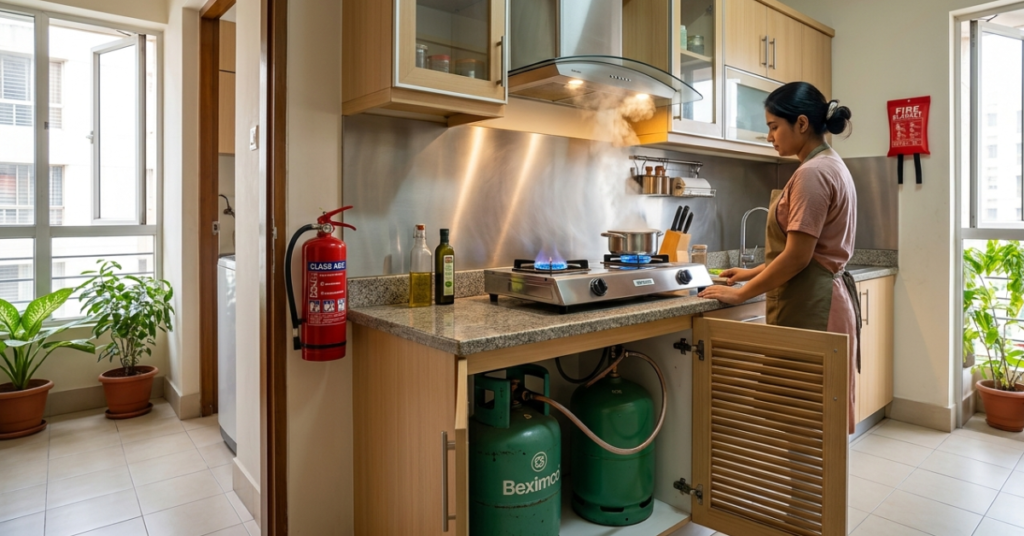
TL;DR: Preventing catastrophic residential kitchen blazes requires a dual strategy of proactive daily habits, understanding practical gas stove safety tips, and adopting heat-resistant kitchen design.
Checking gas connections, installing proper exhaust systems, maintaining safe clearance distances, and using fire-retardant cabinetry hardware significantly reduces fire hazards in Bangladeshi homes.
Immediate Action Checklist: Essential Gas Stove Safety Steps
Kitchen fires in urban Bangladeshi apartments frequently stem from undetected gas leaks, accumulated grease, or improper spatial planning around high-heat cooking zones. Below is an immediate safety audit checklist based on key gas stove safety tips to evaluate your cooking space.
+———————————————————————————–+ | GAS STOVE SAFETY AUDIT CHECKLIST | +————————————+———————————————-+ | Safety Focus | Recommended Action | +————————————+———————————————-+ | Gas Line & Regulator Check | Perform soap-bubble leak test monthly. | | Active Ventilation | Keep exhaust hoods clean and vents clear. | | Flame Clearance | Maintain 2 feet of space around burners. | | Cabinetry Proximity | Keep upper cabinets 30 inches above stoves. | | Storage Organization | Use metal pull-out baskets near cooktops. | | Emergency Preparedness | Keep a Class K or ABC extinguisher nearby. | +————————————+———————————————-+
By executing these baseline checks and following fundamental gas stove safety tips, homeowners drastically reduce accidental ignition risks before turning on a burner.
Why Gas Stove Safety Matters for Modern Bangladeshi Homes
Option 1: Two Concise Paragraphs (Maintains tone and flow)
Bangladeshi cooking involves heavy boiling and high-heat frying that subject kitchens to intense heat and grease. Without proactive safety habits and durable layouts, small gas leaks or flare-ups can quickly become major fire hazards.
Integrating fire-safe appliances with heat-resistant cabinetry protects your family, prevents structural damage, and ensures long-term safety in modern apartment living.
Option 2: Bullet Points (Best for scannability)
- High-Heat Cooking Risks: Heavy frying and boiling generate grease and intense heat that increase fire hazards.
- Fire-Safe Design: Combining daily safety habits with fire-retardant cabinetry protects your home and prevents costly structural damage.
Option 3: Single Short Sentence (Ultra-concise)
Pairing safe daily cooking habits with fire-retardant cabinetry protects modern Bangladeshi homes from high-heat cooking hazards and gas leaks.
1. Inspect Gas Cylinders and Line Connections Regularly
Flexible gas hoses and regulator valves require routine visual and physical inspection at least once a month. Apply a mild soap-and-water solution over connection points, hose bodies, and regulator joints. If bubble clusters expand, shut off the gas supply immediately and replace damaged components before operating your 2 burner gas stove. Following strict LPG gas cylinder safety steps prevents volatile gas accumulations indoors.
2. Ensure Adequate Ventilation Around Cooking Zones
Option 1: Two Punchy Sentences (Best for blogs & guides)
Trapped gas and grease vapors create serious fire hazards in compact kitchens. Keep windows unobstructed and run your range hood during every meal to quickly clear combustible fumes.
Option 2: Bullet Points (Best for quick scanning)
- Clear Ventilation: Keep window grills unobstructed to prevent gas buildup.
- Run Exhaust Fans: Turn on your range hood while cooking to vent volatile fumes and grease.
Option 3: Single Short Sentence (Ultra-concise)
Keep windows clear and run your exhaust hood while cooking to safely vent trapped gas fumes and grease.
3. Maintain Clear Distance Between Burners and Flammables
Flammable household items placed near active burners cause rapid fire spreading. Maintain a minimum clearance zone of 24 inches around gas burners, keeping plastic containers, paper towels, cloth wipes, and wooden utensils far from radiant heat.
4. Install Heat-Resistant Countertops and Backsplashes
Areas surrounding cooktops must feature fire-rated, non-combustible materials such as granite, engineered quartz, or heavy porcelain tiles. Never apply decorative plastic wallpapers, untreated wooden panels, or vinyl wall coverings directly behind gas burners. This architectural rule aligns directly with actionable gas stove safety tips.
5. Never Leave Active Cooking Unattended
Unattended cooking remains a leading trigger for domestic structure fires across urban centers. If you must leave the kitchen area while simmering long-boiling dishes, turn the burner down to minimum output or delegate monitoring to another family member. Adhering to these gas stove safety tips is crucial for long-term safety.
6. Clean Grease Accumulation Frequently
Aerosolized cooking oils settle onto surrounding cabinet faces, stove frames, and counter surfaces, forming a highly combustible residue layer. Thoroughly wipe down stainless steel surfaces and cabinet fronts using grease-cutting agents after every heavy frying session.
7. Choose Flame-Retardant and Moisture-Proof Cabinets
When renovating or constructing a kitchen, select fire-retardant base materials around heat zones. High-density PVC and treated modular boards resist flame propagation and prevent structural warping under constant thermal exposure, reinforcing essential modular kitchen cabinet safety standards.
8. Use Flame-Retardant Hardware and Stainless Steel Accessories
Incorporate metal hardware and organizers rather than low-cost plastic containers near cooking stations. Installing dedicated metal storage solutions like a stove drawer basket keeps cooking utensils neatly secured in heat-safe compartments. Combining hardware upgrades with reliable gas stove safety tips keeps workspaces well-organized.
9. Keep a Fire Blanket or Extinguisher Nearby
Mount a dedicated Class K or ABC dry-powder fire extinguisher near the main kitchen entrance. Avoid mounting suppression gear directly above or behind gas stoves, as active flames could prevent safe access during an emergency.
10. Check Burner Flame Color for Proper Combustion
A safe and efficient gas burner produces a crisp blue flame pattern. A persistent yellow or orange flame indicates incomplete combustion caused by clogged burner ports or improper air-to-gas ratios, elevating carbon monoxide generation and fire risk. Inspecting flame color is one of the quickest gas stove safety tips to spot hidden appliance faults.
11. Dress Appropriately While Cooking
Loose clothing, wide sleeves, long dupattas, and hanging sari pallus easily catch fire when reaching across open flames. Secure loose garments close to the body or wear fitted aprons while operating gas appliances.
12. Shut Off Main Gas Supply Valves at Night
Before retiring for the evening or departing home for travel, shut off main valves on LPG cylinders or turn off pipeline isolation controls. Isolating the main gas line prevents slow overnight leaks from filling enclosed rooms, representing an indispensable aspect of LPG gas cylinder safety.
13. Maintain Proper Clearance for Overhead Storage
Upper wall cabinets mounted directly above cooktops require a minimum vertical clearance of 30 inches (75 cm) measured from the burner grate to cabinet bottom panels. Installing a high-performance auto clean kitchen hood within this gap safely evacuates rising thermal plumes while providing reliable kitchen hood ventilation BD benefits.
14. Educate Household Members and Helpers
Train all family members and domestic helpers on essential gas safety routines, LPG odor identification, and emergency response actions. Ensuring everyone understands critical gas stove safety tips enables prompt action to turn off regulators and isolate electrical switches if a leak is detected.
15. Store Gas Cylinders in Well-Ventilated Base Cabinets
When housing LPG cylinders inside cabinetry, ensure lower storage modules incorporate integrated louver doors or metal mesh vents. Open airflow design prevents heavy, leaked gas from pooling unnoticed inside dark cabinet cavities, maintaining proper modular kitchen cabinet safety.
Essential Cabinetry Hardware & Smart Accessories for Fire-Safe Kitchens
Modern kitchen design balances aesthetic elegance with structural safety. Integrating high-spec modular hardware preserves spatial organization while protecting storage modules from ambient heat damage.
Hinges & Soft-Close Systems
High-grade stainless steel soft-close hinges keep cabinet doors tightly aligned and closed. Secure closure mechanisms prevent flammable oils, spices, and dry ingredients from spilling near active burners during kitchen activity, directly supporting modular kitchen cabinet safety.
Drawer Channels & Heavy-Duty Runners
Smooth, soft-close drawer runners prevent abrupt movements that cause hot pans or hot oil containers to tip over. Heavy-duty runner systems support weighted cookware effortlessly, keeping counter surfaces clean and clear.
Pull-Out Baskets & Organizers
Stainless steel wire baskets allow hot cookware to cool safely within structured spaces. Utilizing a specialized drawer spice rack for cabinet organizes oil bottles and seasoning containers inside pull-out units, keeping counter spaces clear of fire hazards.
Cutlery & Internal Dividers
Internal metal drawer dividers separate sharp prep tools from heat sources. Structured layout systems stop loose wooden spoons and plastic utensils from cluttering stove boundaries.
Handles & Finishing Hardware
Heat-resistant aluminum and stainless steel handles resist structural degradation near high-temperature cooktops. Metal finishing hardware offers dependable tactile control without softening or retaining excessive surface heat.
Fire-Safe Kitchen Layout Planning & Material Selection Guide
Designing a fire-safe kitchen requires evaluating material properties, spatial clearances, and structural workflows before installation begins.
+———————————————————————————–+ | MATERIAL FIRE SAFETY PERFORMANCE MATRIX | +——————-+——————–+——————–+———————+ | Material Type | Flame Resistance | Moisture Resistance| Ideal Application | +——————-+——————–+——————–+———————+ | High-Grade PVC | Very High | Exceptional | Modular Cabinets | | Stainless Steel | Maximum | Complete | Heavy Cook Zones | | Marine Plywood | Moderate | High | Frame Structure | | Particle Board | Low | Poor | Non-Heat Areas | +——————-+——————–+——————–+———————+
Measuring Spatial Clearances Correctly
Precise layout planning guarantees safe distances between open flames, water supply lines, and electrical sockets. Maintain at least 24 inches between the stove edge and kitchen sinks to eliminate splashing hazards on hot burner surfaces.
Matching Cabinet Design to Kitchen Layout
Compact urban kitchens benefit from streamlined modular layouts that segregate hot cooking zones from high-traffic prep areas. Strategic placement prevents accidental contact with active cookware while meals are being prepared.
Budget Planning & Material Selection
Prioritize fire-retardant structural materials like high-density PVC or high-pressure laminated marine plywood over cheap particle boards. High-quality base materials resist heat degradation and structural warping, delivering decades of reliable service.
Common Kitchen Fire Mistakes in Bangladeshi Homes & Fast Fixes
- Wood Shelves Above Stove: Fire hazard as timber dries out.
Fix: Use stainless steel racks or a range hood. - Sealed LPG Cabinets: Traps dangerous leaking gas.
Fix: Add louvered vents to cabinet doors. - Plastic Handles Near Heat: Melts and degrades easily.
Fix: Upgrade to aluminum or stainless steel hardware. - Cluttered Countertops: Flammables near burners invite fires.
Fix: Store items in pull-out wire baskets or drawers.
Emergency Response Protocol: What to Do If a Gas Fire Starts
In the event of a kitchen gas flare-up or stove fire, immediate, structured action prevents minor incidents from becoming major disasters. Reviewing these steps alongside routine gas stove safety tips keeps households prepared.
+———————————————————————————–+ | EMERGENCY GAS FIRE RESPONSE WORKFLOW | +———————————————————————————–+ | 1. DO NOT USE WATER on grease or gas fires; water causes explosive oil splatter. | | 2. SHUT OFF THE GAS SUPPLY immediately at the cylinder regulator or valve. | | 3. SMOTHER SMALL FLAMES using a fire blanket, metal lid, or baking soda. | | 4. DEPLOY FIRE EXTINGUISHER aimed at the base of the fire if flames spread. | | 5. EVACUATE & CALL FOR HELP if the fire cannot be controlled within 30 seconds. | +———————————————————————————–+
Conclusion
Preventing kitchen fires requires combining daily operational awareness, knowledge of gas stove safety tips, and fire-resistant kitchen design. By maintaining gas connections, prioritizing kitchen fire prevention Bangladesh strategies, installing proper ventilation systems, and choosing heat-resistant cabinetry hardware, you ensure your kitchen remains a safe and functional heart of your home.
- Next Steps & Resource Directories
Browse Full Directories
[Main Hub] > [Kitchen Appliances & Modular Fittings]Related Articles
