
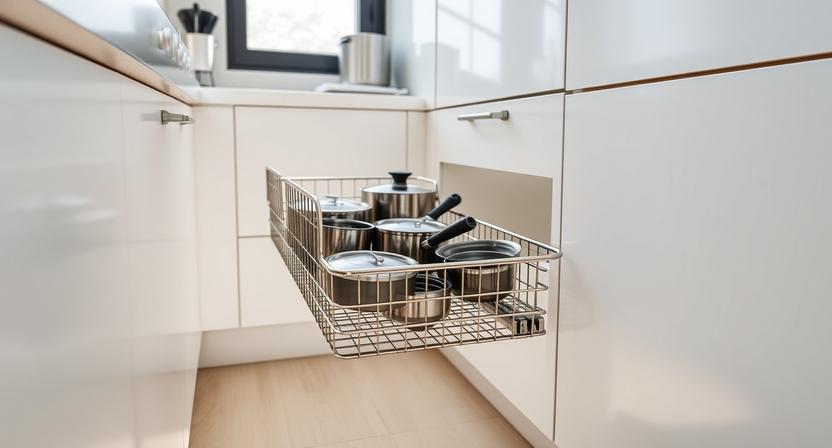
Optimizing a compact modern kitchen requires precision-engineered hardware that eliminates dead space while providing effortless access to your heavy cookware. Upgrading your lower cabinet carcass with a pull out wire basket 400mm kitchen storage drawer transitions your standard deep shelves into high-performance, full-extension systems.
This technical blueprint breaks down structural installations, material specifications, and architectural configurations tailored for modern Bangladeshi homes.
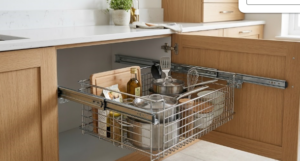
Technical Specifications and Architecture of 400mm Wire Baskets
Understanding the precise physical engineering of kitchen drawer baskets prevents costly layout errors and ensures structural alignment during installation. A standard 400mm classification refers strictly to the external width of your cabinet carcass, meaning the actual basket chassis is smaller to accommodate side-mounted runner tracks.
- External Cabinet Carcass Width: 400mm
- Internal Clear Width Requirement: 364mm to 368mm (calculated with standard 16mm or 18mm board thicknesses)
- Standard Chassis Depth: 450mm to 500mm (requires a minimum cabinet internal depth of 510mm)
- Basket Height Profile: 130mm to 150mm for deep cookware storage
- Maximum Dynamic Load Capacity: 30kg to 35kg under full extension
The structural chassis relies on heavy-duty, industrial-grade wire perimeters coupled with synchronized under-mount or side-mount soft-close ball-bearing runners. These slide mechanisms neutralize momentum when closing the drawer, protecting delicate ceramic kitchenware from structural shock or cracking. For optimal configurations, integrating a dedicated drawer basket for 320-420mm cabinet ensures structural compliance with variable spatial conditions inside custom cabinetry.
Step-by-Step Installation Guide for a 400mm Cabinet Carcass
Executing a flawless installation requires absolute precision, ensuring that the slide rails run perfectly parallel to eliminate friction over extended usage lifecycles. Misalignments by even two millimeters will cause uneven wearing on ball bearings, eventually locking up the extension arm entirely.
Phase 1: Preparing the Internal Carcass and Spatial Markings
Empty the lower base cabinet completely and verify the interior walls are perfectly level and free of structural bowing. Use a digital caliper or manual measuring tape to mark your screw mounting lines exactly 50mm above the cabinet base floor. Ensure these guidelines run horizontally across both left and right interior walls, using a spirit level to cross-reference accuracy.
Phase 2: Installing the Soft-Close Runner Slides
Separate the internal slide member from the main cabinet runner track by pressing down on the plastic release trigger lever. Position the outer runner casing against your horizontal markings on the left cabinet wall, maintaining a 20mm setback from the front edge. Secure the track using premium countersunk wood screws, starting from the front terminal and working toward the rear anchoring point. Repeat this exact sequence on the opposite right wall, verifying that both tracks mirror each other flawlessly.
Phase 3: Mounting and Calibrating the Wire Basket Chassis
Align the integrated slide brackets of the wire basket with the installed runner tracks on the interior cabinet walls. Push the basket firmly into the cabinet until you hear a sharp, metallic click indicating the locking mechanisms have fully engaged. Extend the basket fully to test the smooth glide pathway and verify the soft-close mechanism cushions the final closing cycle seamlessly.
Pro Tip: If the wire basket feels stiff or encounters resistance during extension, do not force the drawer. Loosen the mounting screws on one side by a quarter turn to allow the runner track to adjust naturally to micro-variations in board thickness.
Maximizing Compact Bangladeshi Kitchen Layouts
Urban residential apartments across Dhaka and Chittagong face unique spatial constraints, requiring high-density modern kitchen accessories to maintain organization. High-rise living often limits kitchen configurations to linear or L-shaped designs with minimal counter footprints, making deep base cabinets highly inefficient without mechanical drawer assemblies.
By implementing custom wire drawers, homeowners eliminate the physical strain of kneeling down and manually searching dark corners for foundational cookware.
These systems pull the entirety of your hidden inventory forward into clear sunlight, simplifying meal preparation timelines and reducing overall household stress. To complement base drawers, adding a specialized spice rack for 400mm cabinet organizes smaller jars efficiently, leaving major work counters clear for meal prepping.
Furthermore, these wire grids maximize air circulation directly around your storage inventory, preventing damp spots from forming behind dense stacks of pots. In regions prone to seasonal moisture spikes, maintaining consistent airflow through wire spacing keeps stored utensils drier and less prone to surface film development.
[Traditional Low Deep Shelves] VS. [400mm Pull Out Wire Basket]
– Dark, unreachable back zones – 100% Full Extension Visibility
– Requires kneeling & searching – Ergonomic Standing Access
– Stagnant air traps humidity – Open Wire Matrix Air Circulation
– High risk of clutter buildup – Fixed Segmented Storage Areas
Material Science: Chrome-Plated Iron vs. SUS304 Stainless Steel
Selecting raw construction materials determines whether your newly installed modular kitchen design accessories BD will endure or rust prematurely. The micro-climate inside a kitchen features elevated ambient temperatures, high humidity from boiling water, and ambient airborne salts from cooking oils.
Chrome-Plated Mild Steel Realities
Budget-focused options often utilize iron or mild steel wire wrapped in an incredibly thin electroplated outer layer of chrome decorative finish. While initially brilliant and shiny, this micro-thin outer layer easily develops hairline cracks from the friction of moving heavy metallic pans. Once moisture penetrates this decorative exterior layer, oxidation begins rapidly underneath, leading to structural bubbling, flaking, and structural rust failure.
The Superiority of Authentic SUS304 Stainless Steel
Premium stainless steel kitchen fittings utilize high-grade SUS304 alloy, containing a minimum of 18% chromium and 8% nickel content. This specific chemical composition creates an invisible, self-healing chromium oxide film across the metal surface that blocks oxygen from interacting with iron molecules.
- Corrosion Resistance: Absolute protection against water exposure, household detergents, and organic food acids.
- Structural Tensile Strength: Higher weight tolerance without sagging or permanently warping the outer support wires.
- Hygienic Surface Finish: Non-porous metal texture prevents bacterial adhesion, allowing simple wipe-down maintenance with microfiber cloths.
- Long-Term Value: Outlasts lower-grade alternatives by multiple decades, removing the need for regular replacement hardware cycles.
Comparative Storage Matrix: Baskets vs. Traditional Fixed Shelves
| Operational Performance Metric | Traditional Fixed Wood Shelves | Premium SUS304 Wire Baskets |
| Spatial Utilization Efficiency | 45% (Rear areas remain unutilized) | 95% (Full structural volume accessible) |
| Illumination & Visibility | Low (Shadowed by overhead counters) | High (Ambient room light filters through) |
| Cleaning & Hygiene Routine | Difficult (Requires clearing whole shelf) | Easy (Removable base plates catch debris) |
| Structural Lifespan Profile | Short (Wood warps from water leaks) | High (Immune to rot and standard moisture) |
| Ergonomic Accessibility Rating | Poor (Requires bending and lifting items) | Excellent (Smooth glide standing operation) |
Modern Modular Kitchen Design Trends in Bangladesh
Contemporary residential architecture across metropolitan zones has embraced ultra-minimalist engineering, prioritizing seamless hidden operations and unblemished outer cabinet panels.
Homeowners are moving away from traditional, bulky exterior handles toward clean touch-to-open push configurations and integrated aluminum G-profile profile handle grooves.
Hidden hardware infrastructure forms the backbone of these luxurious kitchen spaces, keeping necessary culinary tools tucked behind uniform cabinet fronts when idle.
Mixing deep wire drawers with high-capacity vertical systems allows an entire kitchen to function smoothly within minimal floor footprints. Integrating an advanced tall unit basket price setup along your main wall establishes a centralized zone for dry groceries, complementing your lower 400mm base cabinets.
Additionally, corner dead zones are being reclaimed using mechanical swing-out shelving units that glide completely clear of the cabinet opening.
Incorporating a functional, high-end magic corner price solution converts previously unusable corner intersections into highly efficient storage points for oversized appliances and cookware.
Critical Mistakes to Avoid When Measuring and Installing Kitchen Organizers
- Measuring the Door Frame Opening Only: A costly mistake is ignoring door hinges or bumpers; ensure slide runners clear them at a 90° door opening.
- Overlooking Carcass Panel Thickness Variations: Verify board thickness before choosing fasteners—16mm or 18mm carcass boards affect runner fit and shim requirements.
- Ignoring Weight Rating Load Limits: Avoid overloading wire baskets with heavy cookware; distribute iron skillets, mortars, and clay pots across multiple lower drawers.
- Neglecting Vertical Alignment Parallel Checks: Installing slide tracks wider at back than front causes failure; use rigid measurement block for parallel alignment.
