
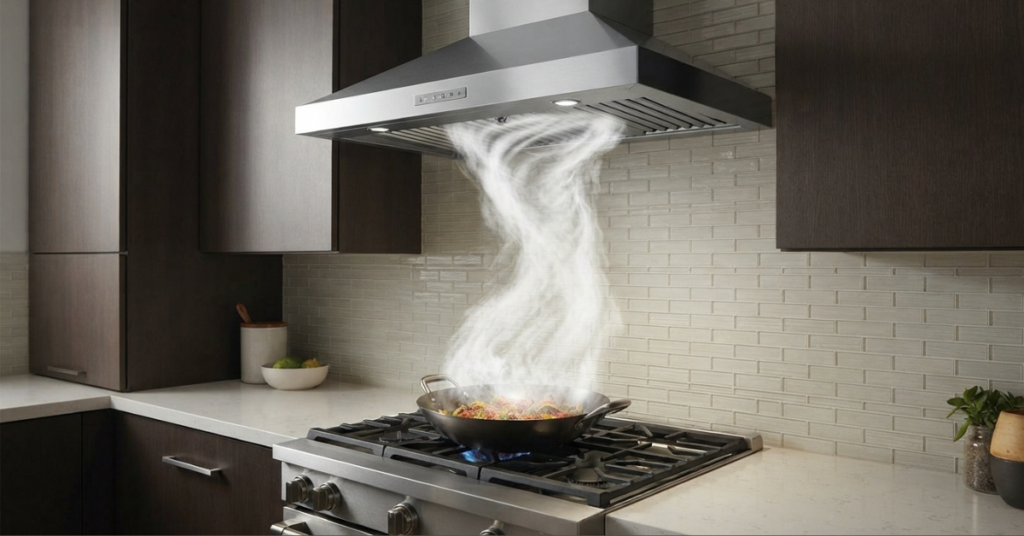
TL;DR: Heavy duty hood ensures powerful smoke extraction, cleaner air, lower grease buildup, and quieter cooking.
Technical Performance Standards for Heavy Duty Ventilation
Selecting an effective kitchen chimney hood Bangladesh households depend on requires analyzing core mechanical specifications rather than relying solely on exterior aesthetics.
Heavy duty hood,Heavy-duty cooking environments generate dense oil vapors, airborne particulate matter, and intense thermal plumes that standard ventilation fans cannot manage.
Airflow Rate and Suction Velocity
Suction capacity dictates how efficiently an exhaust system captures rising thermal plumes before grease disperses across your living space.
For typical Bangladeshi apartments and homes where deep frying and spice tempering occur daily, minimum airflow requirements start at 1200 m³/h.
Heavy duty hood,Premium commercial-grade residential units offer airflow rates reaching up to 1800 m³/h to ensure complete air exchange every two minutes.
Motor Engineering and Enclosure Design
The longevity of a high suction kitchen hood depends on its internal motor architecture. Dual-sealed copper-winding motors provide thermal protection and higher torque, preventing burnout caused by prolonged exposure to airborne oil particles.
Heavy duty hood, Stainless steel blowers housing dynamically balanced impellers reduce rotational vibration, maintaining low operational noise under high load.
Noise Attenuation and Acoustic Comfort
High extraction power must be balanced with quiet operation to maintain kitchen comfort. Modern units feature sound-dampening insulation around the motor housing and aerodynamic air chutes that smooth out turbulence.
Heavy duty hood,Operational sound levels typically range from 48 dB on low power to 58 dB at maximum boost mode.
Pro Tip:Use rigid PVC or galvanized steel ducts with your heavy duty hood for smoother airflow, quieter operation, and longer motor life.
Filter Architecture: Baffle vs. Filterless Auto-Clean Technologies
Heavy duty hood, Choosing the right filtration system directly impacts maintenance frequency, extraction efficiency, and overall lifespan in high-oil cooking environments.
Stainless Steel Baffle Filter Systems
Baffle filters use staggered metallic slats to force oil-laden air through rapid directional changes. As heavy grease particles collide with the cool steel baffles, they condense into liquid form and drain down into a detachable oil collector.
- Filtration Efficiency: Captures 85–90% of airborne grease particles before air reaches the motor impellers.
- Cleaning Routine: Requires washing in warm water with mild detergent every two to three weeks.
- Durability: Constructed from grade 304 stainless steel, offering lifetime resistance against rust and warp.
Filterless Auto-Clean Technology
Filterless designs eliminate internal mesh grilles, directing smoke straight into a high-velocity impeller zone.
Heavy duty hood, Integrated heating elements warm the internal casing during an automated cleaning cycle, liquefying trapped grease so it flows freely into a removable reservoir.
- Maintenance Frequency: Activated via a single touch button once every three to four weeks.
- Suction Retention: Maintains 100% extraction capacity over time because no clogged mesh blocks the airflow channel.
- Ideal Application: Highly suited for busy households seeking minimum manual maintenance while cooking heavy daily meals.
Integrating Range Hoods with Ergonomic Kitchen Layouts
A powerful heavy duty hood functions best when paired with well-organized cooking zones, proper storage fittings, and durable countertops.
| Layout Component | Primary Function | Ideal Specification | Space Utilization Impact |
| High Suction Hood | Airborne oil & smoke capture | 1200–1800 m³/h airflow | Protects upper cabinets from grease |
| Gas Hob / Stove | Thermal energy & heat output | Brass burners with flame failure protection | Delivers precise heat for intense frying |
| Deep Double Bowl Sink | Post-cooking pan cleaning | 304 Stainless steel with sound pads | Accommodates large cookware comfortably |
| Pull-Out Drawer Baskets | Heavy pot & spice access | Soft-close stainless steel runners | Eliminates bending in base cabinets |
| Tall Larder Units | Vertical pantry storage | Tiered pull-out wire baskets | Maximizes vertical cubic storage space |
Pairing a high suction kitchen hood with streamlined base cabinets creates an efficient culinary workspace. When spice jars and oils are organized in pull-out drawer baskets right beside the cooking hob, prep time decreases while counter clutter vanishes completely.
Modern Kitchen Trends and Smart Controls in Bangladesh
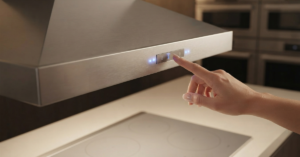
Heavy duty hood, Modern residential interiors in Dhaka, Chittagong, and other urban hubs favor streamlined, tech-integrated kitchen designs.
Touchless Gesture Control Interfaces
Tending to high-heat dishes often leaves hands covered in oil, flour, or water. Motion-sensing gesture controls allow users to turn on the fan.
Heavy duty hood, adjust suction speeds, or activate LED lighting with a simple wave of the hand, keeping glass surfaces free of smudge marks.
Concealed and T-Shape Aesthetic Styles
While curved glass range hoods remain popular, minimalist T-shape designs and slim hidden profiles are growing in demand.
Heavy duty hood, T-shape hoods provide clean geometry that aligns flush with surrounding wall cabinets, offering high aesthetic value without sacrificing extraction performance.
Smart Auto-Clean and Thermal Sensors
Next-generation appliances feature automated thermal sensors that detect ambient heat rising from burners.
Heavy duty hood, The exhaust system automatically adjusts blower speed based on heat output, scaling up during intense searing and throttling down during low simmer cycles.
Warning: Use your heavy duty hood before lighting high-output gas burners to protect electronics from heat..
Step-by-Step Installation and Ducting Optimization
Proper physical mounting and duct planning dictate whether a heavy duty hood operates at maximum rated efficiency or suffers from reduced airflow.
Step 1: Calculate Mounting Height Accuracy
Mount the base of the hood between 65 cm and 75 cm above the gas burners. Placing the hood lower creates a thermal hazard and limits visibility, while mounting it higher allows grease vapors to escape into the room.
Step 2: Establish Direct Venting Routes
Plan the shortest possible exhaust path to an exterior wall. Minimize bend angles; every 90-degree elbow in your ductwork reduces effective suction performance by approximately 10%.
Step 3: Install Rigid Ducting Pipes
Replace thin flexible foil hoses with smooth-walled rigid PVC or steel pipes measuring 150 mm (6 inches) in diameter.
Heavy duty hood, Smooth interiors lower static backpressure, enabling the motor to operate at full capacity with minimal noise.
Step 4: Mount Exterior Gravity Louvers
Attach a weather-sealed wall cap with self-closing gravity flaps on the exterior wall. This stops wind backdrafts, rain entry, and insects from invading your kitchen through the ventilation duct.
Common Range Hood Mistakes and How to Avoid Them
Avoiding critical planning and operating oversights ensures long-term reliability and peak extraction performance from your ventilation system.
Choosing Undersized Ducting Diameters
- The Mistake: Connecting a 1500 m³/h heavy duty hood to a narrow 100 mm (4-inch) wall cutout.
- The Impact: Air turbulence chokes the motor, doubling operational noise and reducing extraction capacity by over 40%.
- The Fix: Core-drill exterior walls to match the manufacturer’s recommended 150 mm duct size before installation.
Neglecting Regular Oil Collector Emptying
- The Mistake: Allowing the lower grease collection cup to overflow into cabinet interiors.
- The Impact: Condensed oil degrades sealants and creates unnecessary fire risks near hot gas hobs.
- The Fix: Inspect and empty the transparent oil container every two weeks during regular kitchen cleaning routines.
Using A Traditional Kitchen Exhaust Fan Alone
- The Mistake: Relying solely on a small wall-mounted kitchen exhaust fan for heavy spice frying.
- The Impact: Wall fans pull general room air out but lack the localized canopy hood pressure required to capture rising grease plumes before they coat cabinets.
- The Fix: Install a dedicated canopy range hood directly above the stove zone to trap grease at the source.
Future Innovations in Kitchen Exhaust Systems
Ventilation technology continues to advance, focusing on energy efficiency, noise reduction, and smart home connectivity.
Brushless Direct Current (BLDC) Motors
BLDC motor technology is revolutionizing modern range hoods by delivering higher torque at lower energy consumption rates.
Heavy duty hood, Compared to traditional AC motors, BLDC drives consume up to 50% less power while offering stepless speed modulation and whisper-quiet operation.
Plasma and Carbon Recirculation Modules
For apartments where exterior ducting holes cannot be drilled due to structural constraints, advanced plasma recirculation filters offer an effective alternative.
Heavy duty hood, These self-regenerating catalytic systems break down smoke particles and neutralize cooking odors at a molecular level before recirculating clean air indoors.
Integrated Environmental Air Quality Monitors
Future-ready chimney hoods feature built-in PM2.5 and VOC sensors. When airborne particulate levels rise above safe thresholds during cooking, the hood automatically switches on, maintaining safe indoor air quality without manual user intervention.
Next Steps & Resource Directories
Browse Full Directories
Related Articles
- how to clean a kitchen hood the Right Way
- Modern kitchen hood: Smart Storage for Every Kitchen Today
- Kitchen Hood Service: Clean, Safe, and Efficient Cooking
- Top Benefits of Kitchen Hood for a Cleaner Home Kitchen
