
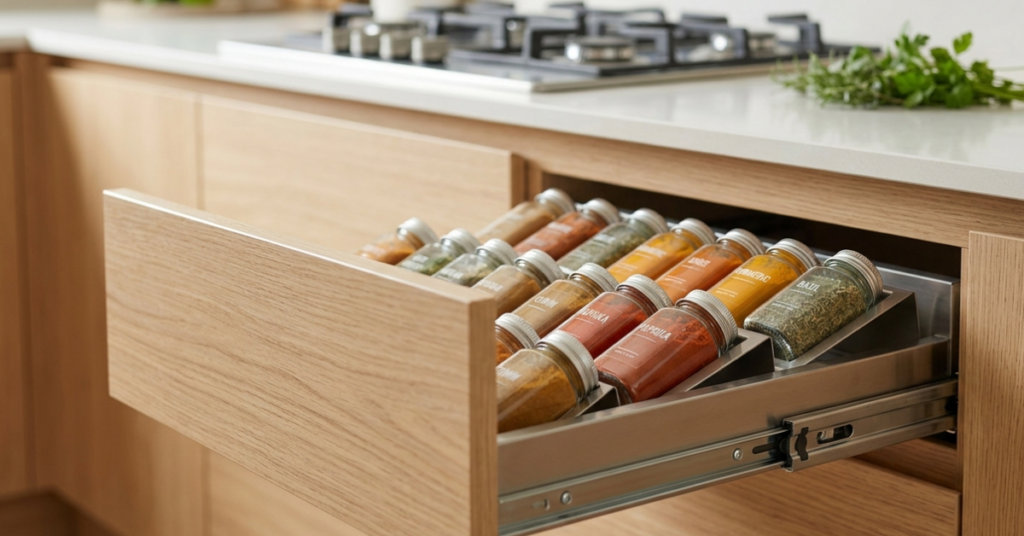
Integrating a dedicated drawer spice rack into lower base cabinetry eliminates countertop clutter and instantly streamlines daily meal preparation in modern apartment layouts.
By organizing oil dispensers, masalas, and daily condiments into structured vertical compartments, you maximize cabinet depth while protecting essential ingredients from heat and ambient grease.
Direct Comparison & Architectural Sizing Guide for Drawer Spice Racks
Drawer spice rack Selecting the correct width for your pull-out spice organizer depends on available cabinet frames, cooktop proximity, and total storage volume.
150mm to 200mm Ultra-Compact Spice Racks
Drawer spice rack Compact layouts benefit significantly from narrow 150mm or 200mm side baskets. These slim units utilize dead space directly beside the gas stove, holding essential cooking oils, soy sauce bottles, and 6 to 8 frequently used spice containers.
270mm to 300mm Standard Capacity Spice Racks
A 300mm drawer spice rack represents the ideal balance for average Bangladeshi households. Featuring dual or triple tier frames, these systems easily store heavy mustard oil jars, tall ghee containers, and up to 16 standard spice bottles without crowding.
350mm to 400mm Heavy-Duty Multi-Purpose Baskets
Wider 350mm and 400mm pull-out units accommodate extra-large condiment bottles, chopped ingredient bowls, and heavy stone spice containers. These wider frames require reinforced ball-bearing slide runners to support higher weight limits.
| Cabinet Width | Primary Storage Focus | Recommended Bottle Capacity | Ideal Placement |
| 150mm | Essential oils, basic masalas | 6–8 small jars + 2 oil bottles | Directly beside gas stove |
| 200mm | Daily spices, vinegar, sauces | 10–12 medium jars + 3 bottles | Lower base cabinet |
| 300mm | Full spice collection, large oil jars | 16–20 jars + 4 heavy containers | Main prep zone |
| 400mm | Multi-purpose pantry items & tools | 24+ mixed jars & cooking tools | Central modular island |
Transformative Daily Benefits of a Dedicated Pull-Out Spice Organizer
An organized cooking zone fundamentally improves household efficiency. When every jar and dispenser sits in a clear, accessible compartment, meal preparation becomes faster and cleaner.
Faster Workflow During Peak Hours
Searching through deep, dark cupboards for missing condiments delays cooking and increases stress during busy morning rushes. Pull-out hardware brings every jar directly into view with a single smooth motion, saving valuable prep time.
Enhanced Countertop Hygiene
Elevating spice bottles off main worktops keeps food preparation surfaces clear and effortless to wipe clean. It prevents oil rings, turmeric stains, and salt residue from accumulating around cooking zones.
Pro Tip: Position your spice rack at least 12 inches away from direct burner flames to protect delicate dry herbs and spices from heat degradation while keeping them within comfortable reaching distance.
Protection for Delicate Glassware
Loose glass bottles stored on open shelves risk tipping over during fast-paced cooking. Secure wire compartments and soft-closing dampeners keep glass containers perfectly stable and upright during movement.
Engineering Standards: SS304 Stainless Steel vs. Standard Hardware
Selecting durable hardware requires paying close attention to metal alloys and runner mechanics. High humidity levels in Dhaka and Chittagong accelerate rust on low-grade metal fittings.
High-Grade SS304 Construction
Opting for solid SS304 stainless steel ensures your pull-out spice organizer resists corrosion, steam, and salt exposure over years of daily exposure. Low-cost chrome-plated iron alternatives often pit, peel, and rust within months.
Soft-Close Undermount Runners
Quality ball-bearing slide rails equipped with soft-close dampeners absorb closing impact. Even when pushed firmly, the drawer glides quietly and slows down before fully shutting, preventing container collisions.
Structural Load Ratings
Standard spice drawers should support at least 25kg to 30kg of static load. Heavy ceramic jars and glass oil bottles exert continuous pressure on slide rails, making heavy-gauge wire construction essential for long-term alignment.
Step-by-Step Cabinet Measurement and Installation Protocol
Precise physical measurement prevents costly installation mistakes and ensures smooth runner operation.
- Measure Internal Frame Width: Measure the internal distance between left and right cabinet walls at both front and back positions to check for frame squareness.
- Account for Hinge Offset: Ensure side-mounted hinges do not protrude into the clear sliding path when the cabinet door opens fully.
- Verify Depth and Clearance: Confirm internal cabinet depth meets the minimum 450mm requirement for standard full-extension slide rails.
- Secure Mounting Rails: Mount heavy-duty bottom or side runners perfectly parallel using corrosion-resistant stainless steel screws.
- Attach Wire Basket & Align: Place the wire basket onto the runner locks and test soft-closing travel speed before tightening final adjustments.
Integrating Spice Racks with Modern Modular Kitchen Accessories
A well-designed kitchen relies on cohesive storage zones. Combining dedicated spice baskets with complementary kitchen storage solutions creates a streamlined environment.
Hot Zone Optimization
Locate your drawer spice rack directly adjacent to the gas stove or built-in hob. Pair it with under-stove dish drawers to keep cooking pots, spatulas, and seasoning supplies within arm’s reach of the burner.
Wet Zone Separation
Keep dry spice organizers well clear of wet dishwashing areas and under-sink cabinets. Combining under-sink baskets with nearby pull-out units maintains a hygienic distinction between washing routines and food prep.
Corner Space Utilization
Maximize dead corner space in L-shaped or U-shaped layouts by installing blind-corner pull-out trays alongside standard base drawer units.
+——————————————————————-+
| EFFICIENT KITCHEN ZONE WORKFLOW |
+——————————————————————-+
| [ PREP ZONE ] [ HOT ZONE ] [ WET ZONE ] |
| Chopping Board --> Gas Stove Burners --> Double Sink |
| Cutlery Trays Drawer Spice Rack Under-Sink Basket |
+——————————————————————-+
Common Selection Mistakes and How to Avoid Them
Avoiding frequent design oversights ensures your storage fittings remain functional and durable for years.
Ignoring Hinge Protrusions
Installing pull-out hardware without factoring in door hinge thickness causes baskets to scrape against internal frame edges upon opening.
Overlooking Weight Distribution
Placing heavy glass oil bottles exclusively on upper wire shelves causes top-heavy imbalance. Store heavy liquids on bottom tiers and lighter dry spices above.
Choosing Non-Modular Wire Frames
Fixed wire frames limit flexibility. Selecting models with adjustable dividers or removable tray liners simplifies cleaning up accidental spice spills.
2026 Bangladeshi Kitchen Layout Trends
Modern urban homes across Dhaka and Chittagong prioritize clean architectural lines, concealed fittings, and maximum ergonomic space utilization.
Concealed Internal Storage
Contemporary modern kitchen layout BD designs feature seamless, handleless cabinetry. Internal pull-out drawers hide utility baskets behind uniform exterior panels.
Full-Extension Concealed Runners
Traditional side-mounted roller slides are increasingly replaced by heavy-duty undermount runners that extend fully forward, offering complete access to rear cabinet corners.
Integrated Modular Accessories
Homeowners prefer built-in hardware combinations including tall larder units, cutlery dividers, and specialized spice baskets that upgrade basic carpentry into functional systems.
Investing in durable, high-grade space-saving kitchen fittings transforms chaotic cooking spaces into clean, structured workstations that elevate daily culinary routines.
Next Steps & Resource Directories
- Browse Full Directories
Related Articles
