
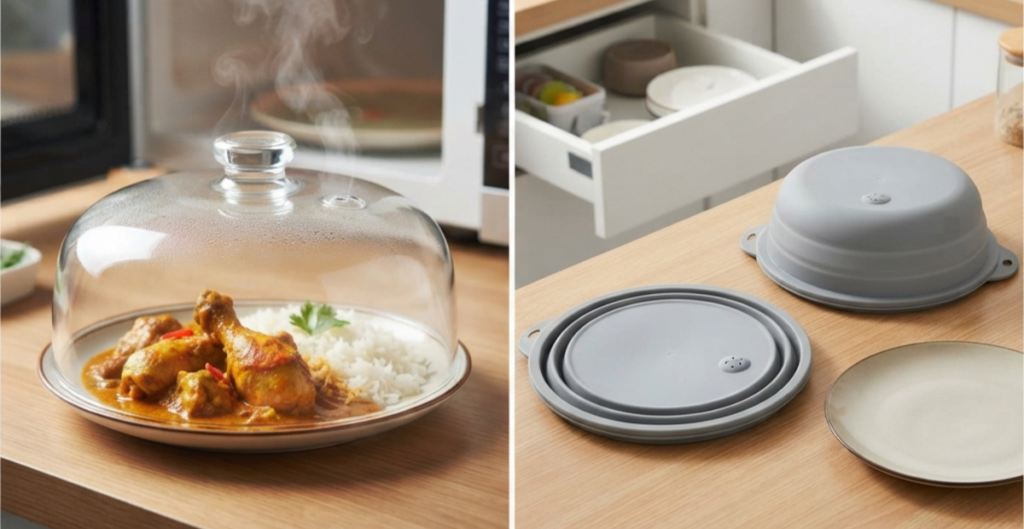
Tired of cleaning baked-on curry splatters from your microwave walls? Standard plastic covers warp over time and can leach harmful chemicals into your family’s food under high heat.
In this tested guide, we reveal the best high-durability, plastic-free microwave food covers available in 2026 to ensure toxic-free, mess-free reheating for every Bangladeshi household.
1. The Core Solution: 4 Tested Plastic-Free Contenders
Selecting a safe microwave splatter guard involves evaluating chemical safety, heat limits, and structural resilience.
Below is our tested breakdown of the four best plastic-free microwave food cover alternatives for modern kitchens.
Borosilicate Glass Dome (The Gold Standard)
microwave food cover is completely inert, meaning it will never absorb food odors, stain from rich turmeric curries, or warp.
It provides excellent vertical clearance so high-domed rice dishes or gravies do not touch the ceiling of the cover.
- Best For: Everyday family reheating and heavy-duty use.
- Pros: 100% chemical-free, dishwasher safe, exceptional clarity, and extreme heat resistance.
- Cons: Heavy; requires careful handling to prevent chipping on granite countertops.
Collapsible Food-Grade Silicone Cover
Made from platinum-cured, food-grade silicone, this cover collapses down to under one inch in height. It is highly impact-resistant, making it perfect for busy kitchens with children where glassware might be easily dropped.
- Best For: Small apartments in Dhaka with limited storage space.
- Pros: Highly durable, unbreakable, dishwasher safe, and folds flat for drawer storage.
- Cons: Can retain strong spice odors if not washed immediately with a grease-cutting dish soap.
Tempered Glass & Silicone Hybrid
microwave food cover a clear tempered glass viewing window with a flexible, cool-to-the-touch silicone rim and handle. It offers the visibility of a glass microwave cover with the shatterproof drop-protection of high-grade silicone.
- Best For: Households looking for an ergonomic, easy-to-grip lid with maximum visibility.
- Pros: Balanced weight, slip-proof handling, integrated steam vents, and excellent impact protection.
- Cons: Slightly more complex to clean around the silicone-glass seal.
Pure Ceramic Reheating Plate Cover
Utilizing high-fired ceramic pottery or stoneware serves as a dual-purpose solution. It acts as an inverted plate cover that retains high levels of steam, helping keep flatbreads or rotis soft during reheating.
- Best For: Minimalists who prefer utilizing existing cookware rather than standalone single-use gadgets.
- Pros: Elegant aesthetic, retains heat exceptionally well, and double-purposes as a serving platter.
- Cons: Lacks visible monitoring windows; completely opaque design.
2. Structural Material Comparison
Choosing the perfect microwave food cover depends heavily on your storage limits, cooking habits, and household size. Refer to this quick-reference table to compare how materials hold up in daily kitchen environments:
| Cover Material | Maximum Heat Limit | Best Structural Fit | Ideal Cabinet Setup |
| Borosilicate Glass | Up to 450°C | Rigid dome, high clearance | Deep cabinet or dedicated shelf |
| Food-Grade Silicone | Up to 230°C | Collapsible, flexible concentric rings | Shallow drawers, narrow slots |
| Glass-Silicone Hybrid | Up to 220°C | Rigid center with flexible outer bumper | Medium drawers or pegboards |
| High-Fired Ceramic | Up to 300°C | Heavy, low-clearance inverted dish | Plate racks or stacked shelving |
3. Why Upgrading to Plastic-Free is Critical for Your Health
Most standard, budget-friendly microwave food covers are manufactured using low-grade polypropylene (PP) plastic.
While labeled microwave-safe, these plastics degrade over hundreds of heating cycles, especially when exposed to lipid-heavy oils from traditional curries that exceed the plastic’s melting threshold.
Chemical Leaching Hazard: Heat with fats can warp cheap plastics, releasing microplastics and chemicals onto food.
Choose a durable glass or silicone microwave food cover to avoid chemical risks and replace warped plastic less.
4. Smart Storage & Modular Systems for Small Kitchens
microwave food cover a compact apartment kitchen requires optimizing every square inch of vertical and horizontal cabinet space. If you choose a rigid glass or ceramic dome, storing it safely to avoid damage is vital.
Integrating specialized drawer configurations can streamline your daily workflow:
- Keep spice containers neatly arranged using a drawer spice rack to keep your countertop preparation zones completely clear.
- Avoid stacking heavy glass covers on top of metal cookware. Use adjustable lid holders or vertical pan slots to protect tempered glass edges from chipping.
- Storing heavy glass domes inside deep cabinets is easy when using a sturdy pull-out drawer basket that glides out smoothly for easy access.
5. Modern microwave setup for sleek kitchen layouts
In modern open-plan Bangladeshi homes, appliances are seamlessly built into custom cabinetry.
To keep your cooking zone clean, efficient, and ergonomically friendly, implement these strategic layout upgrades:
Eradicating Cooking Smoke & Steam
An active microwave and gas stove setup can release substantial amounts of airborne grease and steam.
Installing a high-suction, auto-cleaning range hood helps rapidly exhaust moisture and fine oil droplets, protecting your wood cabinets from swelling due to high humidity.
Keeping Cleaning Zones Clean
Prepare a systematic dishwashing station nearby. Installing a deep, double-bowl stainless steel kitchen sink with sound-deadening undercoating makes hand-washing oversized glass microwave domes simple and prevents annoying clatter against steel basins.
Optimizing Corner Cabinets
Utilize the unused corners of your modular L-shaped or U-shaped counters by installing a heavy-duty corner basket system.
microwave food cover ensures items like your backup glass covers, baking dishes, and small appliances are always within arm’s reach without cluttering countertops.
6. Pro Tips for Using & Maintaining Glass and Silicone Covers
Ensure your premium kitchen accessories last for decades by following these expert-verified maintenance rules:
- Never take a borosilicate glass cover straight out of a cold refrigerator and place it into a hot microwave.
Rapid temperature differentials can cause tempered or low-quality glass to crack. - Always check that the built-in steam vent on your cover is open before hitting start.
If you are reheating bread or traditional flatbreads like parathas, keep the vent slightly closed to trap minimal moisture and avoid a dry, cardboard-like texture. - Turmeric is highly lipophilic (binds to fat) and can discolor silicone rims.
Wash your cover immediately after reheating deep-colored curries using warm, soapy water and a non-scratch scrub pad.
7. Common Reheating Mistakes to Avoid
- Always measure your microwave’s internal turntable and your largest dinner plates before finalizing a purchase.
If a cover is too wide, it will hit the interior walls and block the rotating mechanism. - Ensure the height of your cover is at least 3 to 3.5 inches.
If the lid rests directly on top of your cheese, rice, or gravy, the bubbling food will stick to the top, making a mess and ruining your meal’s presentation. - Lids that seal completely airtight trap high-pressure steam, creating a vacuum that can make the cover difficult to lift or cause hot liquid to spray violently when opened.
Next Steps & Resource Directories
Browse Full Directories
[Main Hub] > [Kitchen Accessories & Hardware]
Related Articles
- How to Choose the Best Pull-Out Cabinet Organizers
- Maximizing Corner Storage with Smart Stainless Steel Racks
- The Ultimate Guide to Heavy-Duty Spice Racks for Modern Kitchens
- How to Choose the Perfect 2 Tier 20 Plate Stainless Steel Dish Rack for Your Kitchen
