
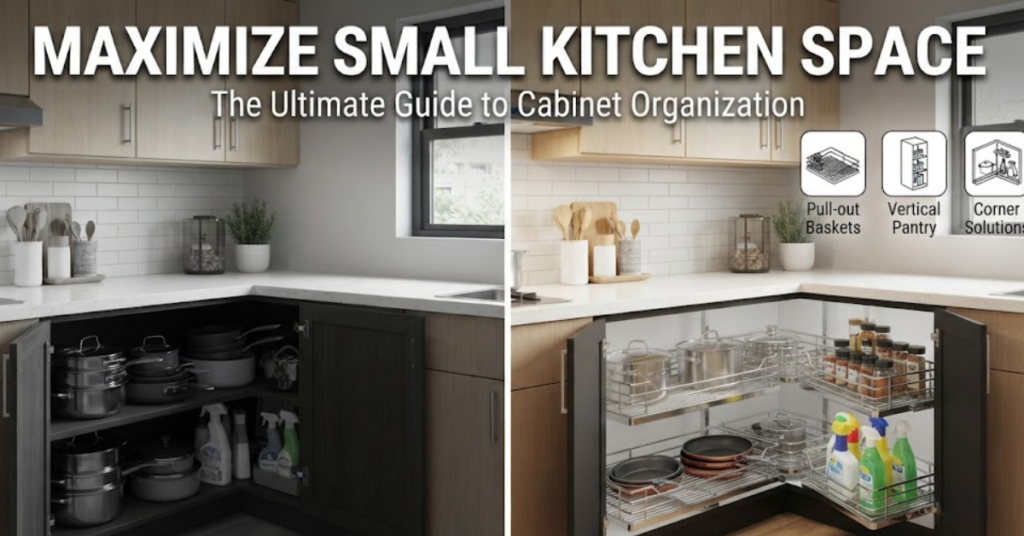
Organize small kitchen cabinets Managing a compact kitchen in an apartment requires maximizing every inch of available space. By substituting fixed wooden shelves with modern pull-out cabinet baskets and modular hardware.
Strategic Framework for Small Kitchen Cabinet Organization
Organize small kitchen cabinets To maximize storage in a small kitchen, divide your cabinetry into functional activity zones.
- Preparation Zone: Position shallow drawers and slim vertical pull-outs near the primary counter space to hold cutlery, chopping boards, and everyday seasoning jars.
- Cooking Zone: Install heavy-duty wire drawers directly underneath the cooktop for pots, pressure cookers, and heavy frying pans.
- Cleaning & Wet Zone: Utilize the space under the sink with moisture-resistant U-shaped pull-outs and dedicated waste management systems.
- Storage & Pantry Zone: Convert tall narrow gaps into vertical pantry towers to keep dry food supplies organized and accessible from both sides.
Why Structural Kitchen Organization Matters
Organize small kitchen cabinets An organized culinary space fundamentally changes how your home operates during busy meal times.
Faster Cooking Workflow
Organize small kitchen cabinets When every item has a designated spot, meal preparation becomes significantly faster and less exhausting.
Better Hygiene and Safety
Organize small kitchen cabinets Proper cabinet organization prevents clutter on countertops, reducing grease buildup and keeping food prep areas sanitary. Storing sharp knives and glass jars in dedicated organizers keeps workspaces clean and hazard-free.
Maximized Usable Space
Organize small kitchen cabinets Utilizing modern small kitchen storage solutions BD ensures deep cabinet corners and vertical gaps are fully used rather than left as dead space.
Stress-Free Meal Preparation
Organize small kitchen cabinets Eliminating the need to dig through stacked cookware makes cooking an enjoyable experience. Smooth hardware allows full visual access to everything inside your cupboards at a glance.
Key Hardware Features to Evaluate Before Purchasing
Organize small kitchen cabinets Selecting the right internal fittings requires evaluating structural quality rather than focusing solely on visual appeal.
Pro Tip: Prioritize hardware manufactured from 304-grade stainless steel with anti-corrosion coatings to withstand high humidity near cooking and washing areas.
- Material Grade: High-grade stainless steel with chrome plating or electro-polished finishes resists rust caused by kitchen steam and washing moisture.
- Load Rating: Ensure slide rails and mounting brackets are rated for heavy loads (at least 25 kg to 30 kg), especially for lower base cabinets holding cast iron or pressure cookers.
- Gliding Mechanisms: Select soft-closing telescopic drawer slides that operate quietly and prevent stored glass or ceramic items from shifting during movement.
- Structural Frame Stability: Verify that tall pantry units and corner pull-outs feature reinforced steel frames to prevent sagging after years of continuous use.
Modular Solutions for Core Kitchen Zones
Installing specialized pull-out hardware transforms cluttered and hard-to-reach cabinet spaces into highly organized, accessible storage zones tailored to your daily cooking needs. By combining base baskets, under-sink racks, and vertical pantry units, you can maximize every square inch of your compact kitchen.
Cooking & Prep Hardware
Organize small kitchen cabinets Installing dedicated pull-out cabinet baskets turns deep base cabinets into accessible storage zones.
Under-Sink & Cleaning Organization
Organize small kitchen cabinets The area underneath the washing sink is frequently underutilized due to plumbing pipe obstructions.
Pantry & Vertical Gap Optimization
Organize small kitchen cabinets Narrow vertical gaps between appliances or walls can be converted into high-density storage using multi-tiered pull-out racks.
Comprehensive Kitchen Storage Comparison
| Storage Hardware Type | Target Cabinet Zone | Key Functional Advantage | Recommended Load Range | Ideal Space Application |
| Base Pull-Out Basket | Lower Base Cabinets | Full-depth visibility and direct access | 25 kg – 35 kg | Heavy cookware and large pots |
| Slim Spice Pull-Out | Narrow Side Spaces | Compact vertical organization for bottles | 10 kg – 15 kg | 150 mm to 300 mm cabinet widths |
| Corner Carousel / Magic Corner | Blind Cabinet Nooks | Swings out hidden corner contents completely | 20 kg – 30 kg | L-shaped or U-shaped layouts |
| Tall Larder Unit | Floor-to-Ceiling Cavities | Maximum multi-tier storage density | 50 kg – 80 kg | Galley kitchens and narrow pantries |
| Under-Sink Rack | Washing Basin Base | Wraps around plumbing pipes to organize cleaning tools | 10 kg – 15 kg | Wet zones and cleanup areas |
Step-by-Step Guide to Organizing Your Cabinets
Step 1: Empty and Audit Cabinet Contents
Organize small kitchen cabinets Remove all items from your current cabinets. Discard expired ingredients and donate duplicate or unused utensils.
Step 2: Measure Internal Cabinet Dimensions
Organize small kitchen cabinets Measure the exact internal width, depth, and height of each cabinet cavity. Account for door hinges, pipe alignment, and frame lip offsets before purchasing internal fittings.
Step 3: Install Specialized Base Baskets
Organize small kitchen cabinets Equip lower cabinets with heavy-duty kitchen cabinet organizers designed for heavy weight loads. Place frequently used pans and pots in the primary cooking zone.
Step 4: Utilize Corner Blind Spots
Organize small kitchen cabinets Transform awkward corner cabinets using 180-degree, 270-degree, or 360-degree revolving carousels. These mechanisms bring hidden items at the back of the cabinet directly into view.
Step 5: Vertical Wall and Door Mounting
Organize small kitchen cabinets Mount slim hanging rails or spice racks on backsplash walls or cabinet doors to clear clutter from main countertop prep surfaces.
Real-World Scenarios & Space-Saving Hacks
- The Deep Cabinet Dilemma: Deep base shelves often turn into storage black holes where items get lost. Replacing fixed wooden shelves with full-extension wire drawers ensures complete access to every item.
- The Awkward Corner Problem: Blind L-shaped corners are difficult to reach. Installing swing-out magic corner trays maximizes dead corner space effectively.
- The Cluttered Cutlery Drawer: Small tools, ladles, and knives easily turn into an unorganized pile. Using modular tray dividers with adjustable partitions keeps every tool sorted by size and function.
- Overcrowded Pantry Shelves: Stacking small jars on deep shelves makes items at the back inaccessible. Incorporating multi-tier modular kitchen accessories Bangladesh creates clear visual tiers so every item remains visible.
Common Mistakes to Avoid When Upgrading
- Ignoring Hinge Offsets: Measuring only the outer cabinet width without considering internal hinge placement can prevent pull-out baskets from sliding freely.
- Selecting Non-Treated Metals: Installing untreated iron or low-grade chrome fittings near sink areas leads to rapid rusting and structural failure due to moisture exposure.
- Overloading Weight Capacity: Exceeding recommended weight limits damages slide rails and causes drawers to sag or jam over time.
- Neglecting Vertical Height: Leaving large empty spaces above short items on wide shelves wastes valuable vertical storage potential.
Maintenance Protocols for Long-Term Hardware Performance
Organize small kitchen cabinets To ensure smooth operation and long hardware lifespan, establish a regular routine for cabinet hardware maintenance:
- Clean Slide Tracks Monthly: Wipe dust and debris from ball-bearing drawer slides using a dry soft cloth to prevent jams.
- Apply Silicone Lubricant: Apply a light layer of silicone spray lubricant to slider rails every six months to maintain smooth, silent operation.
- Inspect Fasteners Annually: Check frame mounting screws and hinge plates annually to ensure hardware remains securely attached to cabinet walls.
- Wipe Down Wire Surfaces: Clean stainless steel wire surfaces with mild detergent and water, then dry thoroughly to prevent water spots and grease buildup.
Emerging Trends in Modern Kitchen Cabinet Architecture
Organize small kitchen cabinets Residential kitchen designs are shifting steadily toward clean, highly functional aesthetics. Modern homes prioritize space efficiency, integrated storage, and minimal visual noise.
- Flush Modular Layouts: Modern handleless cabinetry paired with concealed push-to-open or soft-close mechanisms creates an uncluttered look that makes small kitchens appear larger.
- Concealed Appliance Garages: Storing small appliances behind lift-up cabinet doors keeps countertops clear while keeping appliances plugged in and ready for use.
- Integrated Waste Separation: Multi-compartment waste bins built directly into under-sink pull-out drawers streamline sorting and maintain clean floor space.
- Ergonomic Pull-Down Baskets: Upper wall cabinets fitted with drop-down lift systems allow easy access to high shelves without requiring step stools.
Next Steps & Resource Directories
Browse Full Directories
[Kitchen Park BD Hub] > [Cabinet Storage & Hardware]
Related Articles
- Best Drawer Bins Storage Ideas for an Organized KitchenMulti Drawer Rack Accessories
- Top Cabinet Hardware Trends for Stylish Modern Kitchens
- Pull-Out Pantry Benefits for Smart Kitchen Storage Secrets
- Best Cutlery Tray for Modular Kitchen Storage and Order
